

There's a difference between understanding something and feeling it. You can read about fractional ownership in a hundred articles. You can study the financials, review the legal structures, compare the platforms. You can nod along and say, "Yes, that makes sense."
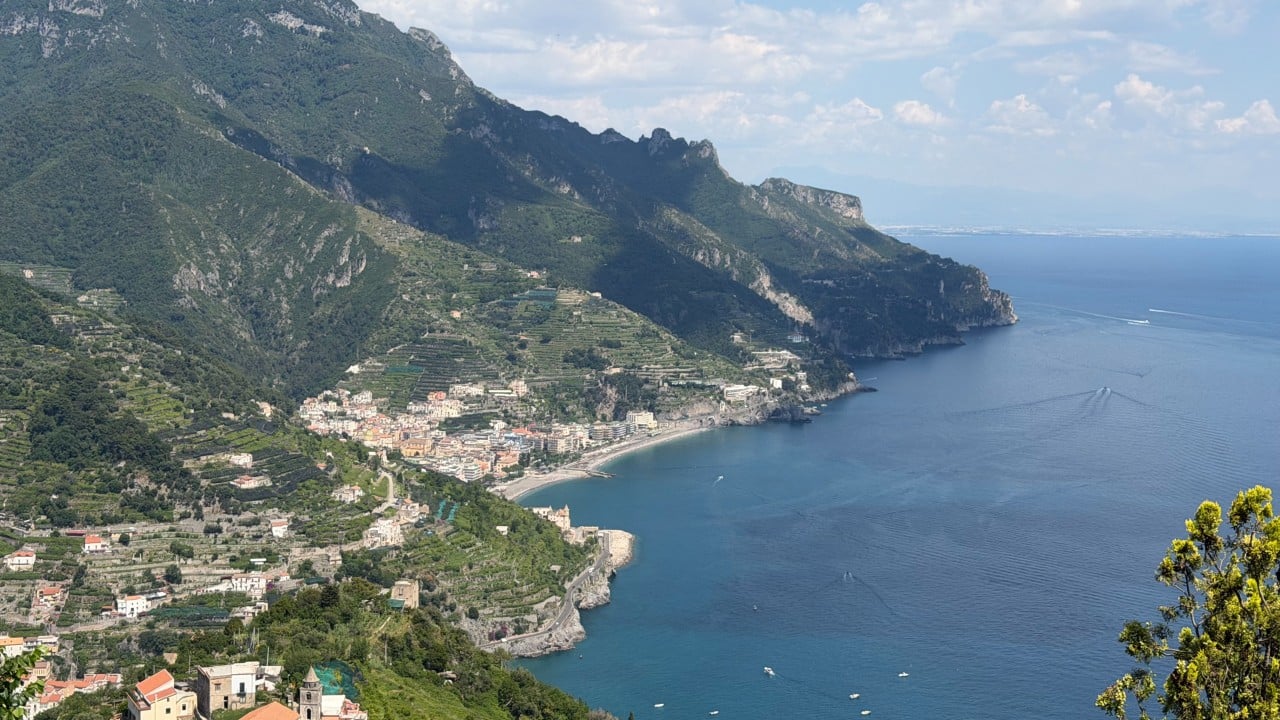
But you won't really understand it until you're standing on a stone terrace in southern Italy, looking out at the Gulf of Salerno with olive groves falling away beneath you, and someone you trust says quietly: "This is what your clients would own a share of."
That's the moment everything changed for me.
The trip I almost didn't take
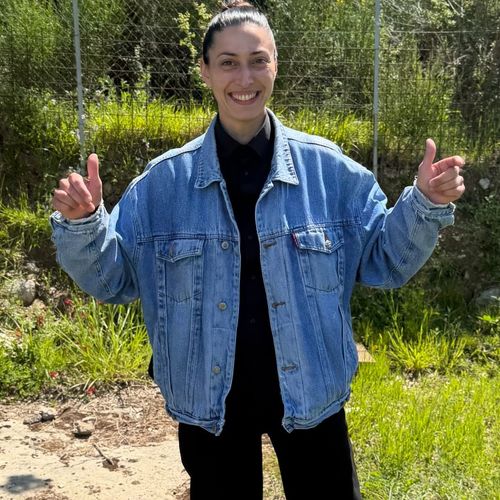
A few weeks ago, my colleague and I travelled to the Cilento region of Campania in southern Italy. The purpose was a Discovery Visit… an invitation from one of our partners to experience their properties and their vision first-hand. As a real estate broker with 26 years in the business and a new international practice to build, the invitation made professional sense. But there was a part of me that wondered whether the trip would simply confirm what the brochures already said.
It did not confirm the brochures. It replaced them entirely.
What Campania taught me about place
Most Canadians who dream of Italy picture Tuscany, or the Amalfi Coast, or perhaps the lakes in the north. These are beautiful places. We drove through Positano along the way, and the coastline is undeniably stunning. But the overcrowding was impossible to ignore… tour buses stacked along narrow roads, restaurants designed for volume rather than conversation, and a feeling that you were consuming someone else's version of Italy rather than experiencing your own.
Campania is the antidote to that.

The Cilento sits within one of Italy's largest national parks, a UNESCO World Heritage region where the Mediterranean Diet was first identified as a way of life, not a trend. The archaeological park at Paestum preserves temples dedicated to Hera, Athena, and Neptune that have stood for over 2,500 years. The beaches carry 14 kilometres of Blue Flag certification. And the hilltop village of Trentinara, known as "La Terrazza del Cilento," offers a panoramic view that stretches from the mountains to the sea with nothing between but olive trees and centuries of quiet.
This is not the Italy of postcards and souvenir shops. This is the Italy where Italians actually live.
The morning that changed how I think about ownership
On a Tuesday morning, we visited Tenuta Vannulo, a buffalo mozzarella farm near Paestum. Through the glass, two artisans were pulling fresh mozzarella from warm water, stretching it by hand, placing it on trays before it had even stopped moving. The smell of warm milk and fresh curd. The sound of water. The quiet concentration of men doing something their families have done for generations.
Later that day, we visited the Tredaniele vineyard. At the entrance, a sign reads: Il vino scalda il cuore, l'amore lo fa battere. Wine warms the heart. Love makes it beat. We sat among the vines while the sun moved across the hills. Nobody checked a watch. The wine arrived, then bread and oil, then conversation.

These experiences had nothing to do with real estate, technically. But they had everything to do with what fractional ownership actually means. Because fractional ownership, done properly, is not a transaction. It's an invitation to participate in a place… its rhythms, its food, its people, its unhurried way of being. The mozzarella farm and the vineyard are not features listed in a property brochure. They're the life that surrounds the property. And that life is what you're really buying into.
The terrace at 600 metres
One afternoon, we drove up to Trentinara, a medieval village perched on a cliff 600 metres above the Cilento plain. The village is known as "La Terrazza del Cilento"… the terrace of the Cilento… and when you arrive at the panoramic viewpoint, you understand why.
Below, the land falls away in layers of olive groves and stone-walled fields. The Gulf of Salerno glitters to the west. On a clear day, you can see Capri. At the viewpoint, an iron sculpture of two lovers frames a red bench where visitors sit and look out at something that words struggle to hold. The village behind you is ancient; stone streets, old churches, a quietness that has nothing to do with emptiness and everything to do with peace.

Standing there, the feeling was less "this is beautiful" and more "this is what beauty was before someone tried to sell it." Trentinara is not a tourist attraction. It's a place that simply exists, unhurried, and offers itself to whoever takes the time to arrive.
On another day, we hiked into the hills above the village to a waterfall tucked in a gorge of green so dense it felt like stepping into a different century. The water was clean; the air smelled like wild herbs and wet stone. It was the kind of place that reminds you what your body already knows about rest, about breathing, about slowing down.

Walking through the properties
Vecchio Masseria is an example of one of the properties in our portfolio. It is a restored stone farmhouse, centuries old, sitting on a hillside overlooking the Campanian countryside. The restoration work has been done with extraordinary care; original stonework preserved, modern wellness features integrated without overpowering the heritage. An infinity pool stretches out toward the valley below, and from the terrace the view is one of those rare compositions where everything… the hills, the olive groves, the distant mountains, the light… seems to have been arranged by someone with impeccable taste and infinite patience.

As someone who works with heritage properties every day in southwestern Ontario, who commissions architects to document the heritage features of century homes, walking through a 400-year-old masseria being restored to this standard was a professional revelation. The philosophy is the same one that guides my own practice: preserve what time built, honour the craft, and let the building tell its own story. But here it was being done at a scale and in a setting that took my breath away.
The property isn't simply beautiful. It's the kind of place that makes you think differently about how you want to spend your time. You sit on the terrace with the valley below and the stone warm under your hands, and the question isn't "Can I afford this?" The question is "Why have I been waiting?"
What fractional ownership is… and what it isn't
This is the part where the education matters, because there are genuine misunderstandings that keep people from exploring something that could change their lives.
Fractional ownership is not a timeshare. A timeshare gives you a right to use a property for a set period. You don't own anything. Fractional ownership gives you a registered share of a real property… you're on the land registry, you hold genuine equity, and the value of your share can appreciate over time just as any real estate holding does.
A fractional share in a restored Italian villa through a reputable company that we have carefully chosen means you own a piece of the property alongside a small number of co-owners. Professional management handles everything: maintenance, staffing, cleaning, concierge. Your responsibility as an owner is to arrive, enjoy the property, and live the life it offers. The operational burden that keeps most Canadians from buying a whole property abroad… the contractors, the taxes, the management from 7,000 kilometres away… simply doesn't exist.
The financial structure is transparent. A share is priced based on the property's value divided by the number of owners. Usage is allocated fairly and managed professionally. And unlike a vacation rental or a hotel, you return to a home that you own, where your personal items can remain in your own on-site storage unit, where the staff knows your name, and where the terrace view hasn't changed since the last time you sat there.
For the Canadian professional who loves Europe, who has the means to invest but not the appetite to manage a foreign property alone, fractional ownership solves a problem that has kept thousands of families from living the life they've imagined.
The wellness dimension
The connection between wellness and place is something I've spent years thinking about. In my heritage practice in Canada, wellness in the home means natural light, clean air, non-toxic materials, spaces designed for quiet and renewal. The Global Wellness Institute estimates that wellness real estate will exceed $1 trillion in value within the next five years. This is not a niche; it's a fundamental shift in what discerning buyers want.
In Campania, wellness is not a design feature. It's the default condition. The air coming off the Mediterranean is clean. The food is grown locally and prepared simply. The pace of life leaves room for rest, for walking, for long meals with people you care about. A restored wellness property in this landscape doesn't need to add wellness features. It just needs to let the environment do what it already does.
When your morning begins with a walk through lemon groves and your evening ends with wine from the vineyard down the road, wellness stops being a concept and becomes the texture of daily life.

Why this matters for Canadians
There is a particular kind of Canadian who this is for. You know who you are. You've thought about Italy. You've talked about it over dinner. You've saved the article, bookmarked the website, mentioned it to your partner after a glass of wine on a Friday evening. But you haven't done anything about it because the whole idea felt too complicated, too far away, too much of a commitment to manage from home.
Fractional ownership was designed for exactly this moment. It takes the dream you've been carrying and makes it structurally possible… without the full capital cost of sole ownership, without the operational burden, and without the uncertainty of navigating a foreign market alone.
What you need is someone who has been there. Who has walked through the property. Who has touched the stone and sat on the terrace and tasted the fresh mozzarella and can tell you, from genuine experience, what this life actually feels like.
That's why I went. And that's what Portico International exists to offer.
What comes next
Portico International is my new practice that is ten-years in the making, built specifically to help Canadian buyers explore fractional ownership in Europe with the guidance of someone who understands both sides of the conversation… the Canadian buyer's perspective and the European property landscape. It's the international arm of my work, with a portfolio of fractional properties located in Italy and France. We have partnered with three highly reputable companies that have expertise in various regions in Europe. This new practice is running alongside the heritage and wellness real estate practice I've built over 26 years in Ontario.
The properties are real. The ownership structures are transparent. The lifestyle is everything the brochures promise and, if my experience in Campania is any indication, considerably more.
Over the coming weeks, I'll be writing more about what I learned… the financial structures, the legal considerations for Canadian buyers, the differences between fractional operators, and the regions that are drawing the most interest from internationally minded professionals. Each piece will be grounded in what I've seen and experienced, not what I've read in someone else's marketing.
If fractional ownership has crossed your mind… even just as a quiet thought over dinner… I'd welcome the conversation. Not a sales pitch. A conversation. The kind where you ask the questions you've been carrying, and someone who has been there answers them honestly.
Because the best thing I brought home from Italy wasn't a photograph or a bottle of wine. It was the certainty that this is real, it works, and it's worth knowing about.
You can explore the properties and register for more information at: www.cityhousecountryhome.com/portico.
Check out this article next